 by
by 
If we sat down for coffee right now, I can guess the first three questions you’d ask me. I know this because every buyer I’ve met in the last three months asks them:
- “Will prices drop another 5% if I wait?”
- “Are interest rates going to crash back down soon?”
- “Should I just sit on the sidelines for another year?”
These are valid questions. But here is the hard truth I’ve learned from guiding clients through both the “free money” frenzy of 2021 and the “rate shock” of today: The buyers who win in the long run aren’t the ones who timed the absolute bottom. They are the ones who got the math right.
The difference between a successful purchase and a stressful one isn’t saving $20,000 on the purchase price—it’s correctly calculating your Cash Flow + Risk Tolerance.
This Is Not the Market of 2020 (And That’s a Good Thing)
Before we talk strategy, we need to accept that the rules have changed. We aren’t just in a “dip”; we are in a structural shift.
- The End of “Free Money”: We need to stop anchoring our expectations to 1.5% mortgage rates. Even as rates soften, we are likely heading back to a “normal” range (3.5% – 4.5%). If your plan relies on rates dropping to near-zero, you are gambling, not investing.
- The “Hangover” Effect: A lot of demand was “borrowed” during the pandemic. Many people who bought at the peak are now facing renewal walls. This is keeping the market soft, but it also means banks are much stricter.
- The Silent Supply Crunch: Construction starts are at multi-decade lows. Developers are pausing projects. This means that while inventory is okay today, we are facing a massive supply gap in 2027/2028.
The 3 Big Questions You Need to Answer
If you are on the fence, here is the framework I use with my private clients to help them decide.
1. The Math of “Waiting” vs. “Buying”
Many buyers obsess over the purchase price but ignore the cost of waiting.
Let’s say you wait 12 months hoping for a $30,000 price drop on a condo.
- Scenario A: Prices drop, but you paid $30,000 in rent during that year. You broke even, but lost a year of principal paydown.
- Scenario B: Prices stabilize, and interest rates drop slightly, bringing more buyers back. You are now competing in multiple offers again.
When “Waiting” makes sense:
- You have zero emergency fund.
- Your job stability is shaky.
- You need time to fix your credit score to qualify for a better tier lender.
When “Waiting” is a trap:
- You have the down payment and stable income.
- You found a home that fits your 10-year plan.
- You are only waiting because you want to brag that you bought at the “absolute lowest point.” (Spoiler: You will likely miss it).
2. Who Should Absolutely NOT Buy Right Now?
I have turned away clients recently because the risk profile wasn’t right. You should not buy in 2026 if:
- You have no “Life Buffer”: If one month of unexpected expenses (car repair, dental) would make you miss a mortgage payment, do not buy.
- You are a “Flipper”: If you think you can buy, paint, and sell in 18 months for a massive profit, this is the wrong market. This cycle rewards holding power, not speed.
- The “Renewal Denier”: If you are calculating your affordability based only on today’s teaser rate and assuming you’ll refinance at 2% in three years, you are setting yourself up for failure. We must stress-test your budget at higher rates.
3. If You Are Buying: The “Safety First” Strategy
If you have the cash flow and decide to move forward, here is how we protect you.
- Product Selection is Everything: In a booming market, “a rising tide lifts all boats.” In a flat market, quality matters. We look for:
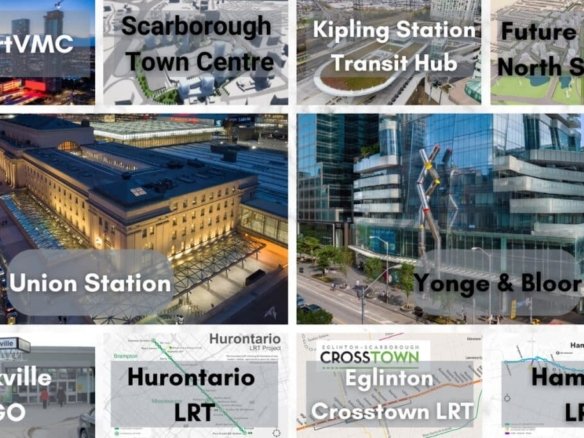
- Transit-Connected: Properties near GO or Subways hold value best.
- Management Health: Avoid old condos with skyrocketing maintenance fees.
- Layout: Functional layouts (no wasted hallways) always rent and resell better.
- The “Buffer” Budget: We don’t shop at your maximum pre-approval amount. We shop at a number that leaves you $500-$1,000/month in breathing room.
- Negotiation: It’s a buyer’s market. We don’t just ask for a lower price; we ask for conditions that protect you (inspection, financing, status certificate review). We use the “days on market” data to negotiate aggressively but respectfully.
How I Can Help (Beyond Just Opening Doors)
My job isn’t to convince you to buy. In fact, I’m happy to tell you not to buy if the numbers don’t make sense.
I view real estate as a spreadsheet first, and a home second. Here is what I can do for you:
- The “Stress Test” Simulation: I will run three scenarios (Best Case, Base Case, Worst Case) so you know exactly what your life looks like if rates stay high.
- The “Stay vs. Go” Analysis: We compare your current rental situation directly against a purchase scenario to see the true 5-year cost.
The Next Step: Don’t rely on headlines. Contact me today with a few lines about your situation (Current rent, approximate budget, and your biggest fear about the market). I’ll send you back a raw, honest 1-Page Strategy Sheet—no strings attached.
Let’s make sure your next move is a safe one.

Join The Discussion